
Adeola Bolu hadn't played suwe in twenty years. She'd forgotten the rules, the rhythm of it, the way your legs burned after five rounds of hopping through chalked squares. But on November 15th, standing barefoot on the grass at Aimas Garden in Ikoyi, the 32-year-old banker found herself laughing so hard she had to stop mid-hop to catch her breath.
"I didn't realize how much I needed this," she said, catching her breath. Around her, grown adults—lawyers, tech workers, entrepreneurs were all over the lawn either playing Ayo Olopon, throwing balls into the basketball hoop, and arguing over the rules of Ten-Ten like they were back in their parents' compounds.
This was BCKYRDFEST, and these people had paid between ₦10,000 and ₦18,500 to be here. Welcome to the nostalgia economy, and it's booming. By 4 PM, over 200 guests had cycled through the venue, and the energy was electric in a way that felt distinctly un-Lagos. No one was posing for Instagram. No one was networking. People were just playing. The Traditional Games Zone had become the heart of the event, with thirty-somethings rediscovering childhood rituals they'd buried under years of hustle and economic anxiety.
Kelechi Johnson, one of the organizers through House of Apollo, watched from the sidelines with visible relief. Two months earlier, he'd been discussing the concept with friends and partners: a whole festival built around childhood games and throwback music. Would people actually pay for this?
"Honestly, we just wanted to create something that felt real, something that reminded people of simpler times," he said, watching a group of women argue over a game of Ludo. "BCKYRDFEST came from a shared love for community, good music, great food, and that carefree energy we all know and occasionally miss. It’s our way of saying, stepping outside and living a little again." The bet paid off. Within two weeks of the announcement in early November, they were tracking 70% capacity. By the week of the event, they were sold out.
In the lounge area overlooking the Lekki-Ikoyi link bridge, with the ocean breeze cutting through the afternoon heat, DJ Markiss was spinning Plantashun Boiz when something remarkable happened: the entire room started singing. Songs these millennials hadn't heard in years, lyrics they had mastered years ago like multiplication tables.
"As adults, especially in Nigerian culture, there's this pressure to always be 'serious,'" Adeola explained later, her voice still hoarse from singing. "You're supposed to be focused on career, marriage, building, hustling. Taking a whole day to just play and be silly feels almost rebellious. But I need that. I think a lot of us do."
She's not alone. Dr. Krystine Batcho, a psychologist at Le Moyne College who has studied nostalgia for over two decades, says this response is increasingly common among millennials globally. "Nostalgia acts as a powerful psychological resource, especially during difficult or uncertain times," she explains in her research. "It functions as a coping mechanism, which is why millennials, who have faced various crises and rapid changes, are particularly drawn to it."
But BCKYRDFEST attendees weren't just paying for games and snacks. They were purchasing something less tangible: permission to regress. Permission to be unproductive. Permission to prioritize joy over utility for six hours on a Saturday afternoon. That permission, it turns out, is worth ₦10,000 to ₦18,500.
The pricing itself tells a story about modern Lagos. At ₦10,000 for a day pass (Omo Yard, 12PM–5PM) and ₦18,500 for an evening pass (Big Steppaz, 5PM–10PM), BCKYRDFEST positioned itself as an accessible premium, not cheap, but within reach for Lagos's young professional class.
"That price point tells you something about disposable income among Nigerian millennials," notes Kunle Taiwo, an economist who studies consumer behavior in West Africa. "Ten to fifteen thousand naira for a Saturday experience is significant spending. It suggests there's a segment of the population that's moved beyond just survival spending into experience spending. That's a marker of economic maturity."
And they're not alone. Globally, the nostalgia economy is becoming a lucrative market. Barbie, a film built entirely on multigenerational nostalgia, grossed over $1.4 billion in 2023, including significant returns in Nigeria. Y2K fashion including low-rise jeans, butterfly clips, platform shoes has resurfaced not as irony but as genuine aesthetic preference. Pokémon cards are selling for thousands of dollars. Nintendo is re-releasing Game Boys.
According to market research firm Mintel, the global nostalgia market, encompassing everything from retro products to throwback experiences, is expanding rapidly. In the food and beverage sector alone, 76% of UK consumers report being attracted to sweets that remind them of their childhood. Memory, it turns out, is a powerful selling point. But in Lagos, where the average millennial navigates economic pressures their Western counterparts might not fully understand, nostalgia carries additional weight.
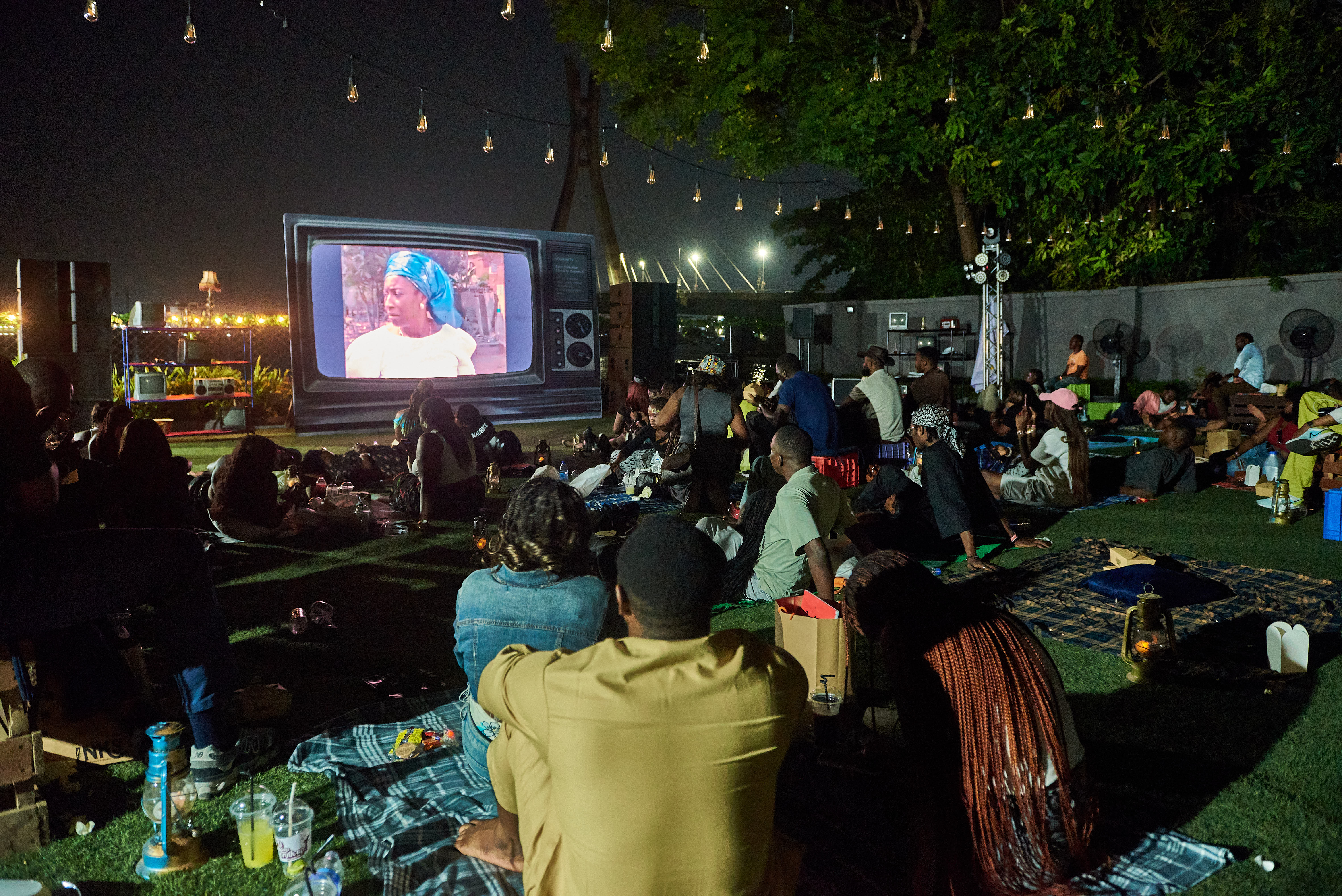
By evening, the vibe had shifted. In the cinema space, guests settled in for a screening of "Billionaire's Club," the 2003 Nollywood classic that defined an era of Nigerian film. The room erupted at several familiar scenes, especially ones that went viral on social media. People quoted lines before the actors delivered them. When the credits rolled, no one moved. They sat there, suspended in a collective memory of simpler times, when economic anxiety was less painful, and when the future felt more certain.
"There's a whole category of experience that the Lagos event market wasn't serving," explains a cultural analyst who attended. "Most events are either about 'turning up'—dancing, drinking, being seen, or they're formal affairs. BCKYRDFEST is creating a third category: structured nostalgia. And clearly, there's demand." The demand is rooted in something deeper than entertainment. From an economic perspective, BCKYRDFEST represents a market gap being filled. Lagos has no shortage of nightlife or high-society events, but experiential events focused on play, nostalgia, and casual community have been largely absent.
At the food court, Comida by Niime, the second arm of the collaboration, had created what they called the "Throwback Feast", several elevated reinterpretations of childhood staples. Sunday white rice & beef stew, pasta with meat balls, palm wine and more. Guests either stood in line or sat across a table facing one another, like the village gathering stage you’d normally see in movies, just to get the taste of something. "The taste of something that reminds you of home," one attendee said, eyes closed as he chewed. "That's what I paid for."
Dr. Batcho's research validates this. "Nostalgia isn't about wanting to literally return to childhood," she clarifies. "It's about accessing the emotional states associated with that time—security, wonder, uncomplicated happiness. For adults dealing with complex, stressful lives, creating structured opportunities to access those feelings is psychologically valuable." The organizers understood this intuitively. "Our expectation is for our guests to leave feeling lighter, connected, and nostalgic in the best way," they said. "The warm, familiar feeling of belonging. The laughter, the singalongs, the taste of something that reminds you of home."
As the sun set and the evening session wound down, guests lingered. No one wanted to leave. At the photo booth stations, over 500 photos had been taken—adults in retro outfits, embracing the aesthetic of their youth without irony or embarrassment. If BCKYRDFEST succeeds (at the time of writing this article, all metrics showed the event succeeded), expect copycats. The nostalgia economy playbook is portable. Every generation and culture has its own version of "the good old days." In Nigeria's case, there's particularly rich material: the relative economic optimism of the late 1990s and early 2000s, the golden age of Nollywood, the music of the Plantashun Boiz and Remedies era, the pre-internet social culture of compound games and neighborhood friendships.
The organizers have already confirmed BCKYRDFEST as an annual flagship event, with plans to expand capacity for future editions. They're betting that what they witnessed on November 15th wasn't a fluke but a revelation, proof that there's a hungry market for experiences that prioritize emotional restoration over social capital. But perhaps the deepest insight isn't economic, it's psychological. The nostalgia economy exists because modernity, for all its conveniences, has costs. Constant connectivity means constant availability for work. Social media creates endless comparison. Economic pressure is relentless. The future often feels uncertain.
“Our expectation is for our guests to leave feeling lighter, connected, and nostalgic in the best way, the organizers commented”. The warm, familiar feeling of belonging. The laughter, the singalongs, the taste of something that reminds you of home. The question of whether that integration is worth ₦10,000 to ₦18,500 has been answered as the debut edition of the event catered to over 200 guests on November 15th. This is not surprising judging from early interest as young Nigerians already answered that question clearly: yes. The past, properly packaged, is worth paying for. And in 2025 Lagos, that might be the most telling economic indicator of all.